Agentic AI in Space Missions: The Autonomous Intelligence Redefining Exploration
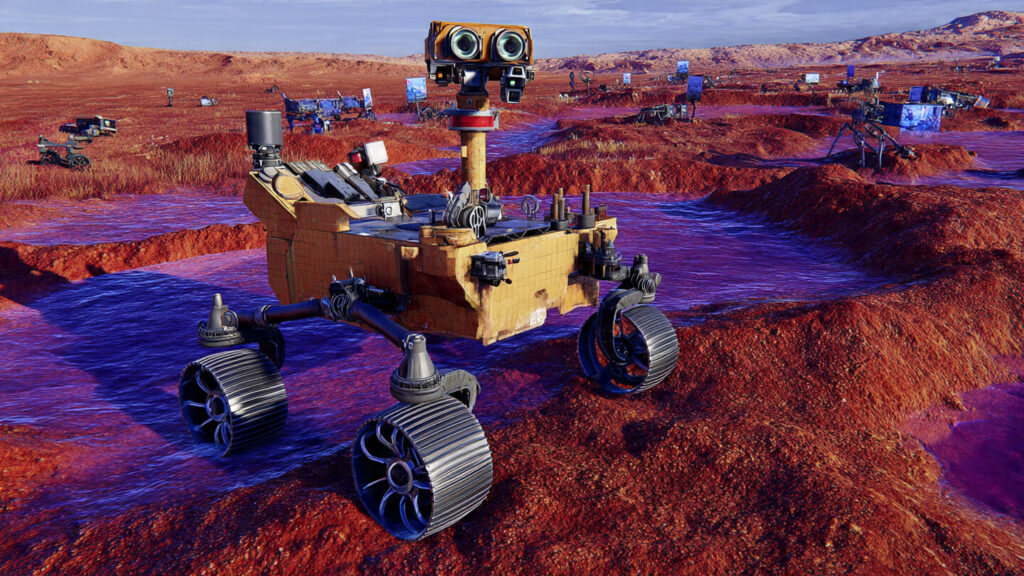
Space exploration has always been limited by distance. When a command takes 20 minutes to reach Mars, waiting for human decisions becomes a bottleneck. That’s why agentic AI in space missions is no longer experimental—it’s essential.
Instead of reacting to pre-programmed rules, modern spacecraft now plan, reason, adapt, and act on their own. Mars rovers choose targets. Satellites dodge debris autonomously. Deep-space systems recover from faults without calling home. The shift is subtle, but profound: machines are no longer just tools in space—they’re decision-makers.
And this change is accelerating.
What Makes Agentic AI Different From Traditional Space AI
Agentic AI refers to autonomous systems that pursue goals independently rather than waiting for constant instructions. In space environments, this distinction matters more than anywhere else.
Unlike older reactive models, agentic systems combine several capabilities:
- Long-term planning and goal optimization
- Real-time perception using vision and sensor fusion
- Tool-calling and task sequencing
- Self-correction when conditions change
- Collaboration with other autonomous agents
These systems draw from reinforcement learning, computer vision, and language-based reasoning to adapt on the fly. When a rover encounters unexpected terrain or a satellite detects an orbital threat, agentic AI doesn’t freeze—it recalculates.
Communication delays make autonomy non-negotiable. At Mars distance, manual control is impractical. Agentic AI fills that gap by making informed decisions locally, right where the action is happening.
Mars Rovers: Where Agentic AI Proves Its Value
The clearest example of agentic AI in space missions lives on the surface of Mars.
Perseverance: Science Without Waiting for Earth
NASA’s Perseverance rover goes far beyond scripted automation. Its onboard intelligence allows it to:
- Scan rock surfaces using the PIXL instrument
- Identify mineral compositions in real time
- Adjust sampling strategies autonomously
- Re-prioritize science targets based on context
In late 2025, Perseverance executed its first AI-planned drives without step-by-step human routing. Using orbital imagery and terrain data, the rover generated waypoints for hundreds of feet of travel, validated the plan in a digital twin, and executed it safely.
That’s not simple navigation. It’s autonomous mission reasoning.
Curiosity: Learning From Shape, Color, and Terrain
Curiosity laid the groundwork years earlier. Its AI selects laser targets based on rock shape and color, avoiding uninteresting or risky samples. Autonomous navigation reduces the time engineers spend micromanaging routes, freeing teams to focus on science instead of steering.
Both rovers rely on vision-language models to interpret terrain features, localize themselves, and plan paths across sand ripples and boulder fields. The result is faster progress with fewer Earth-based interventions.
There’s a quiet confidence in watching a machine decide what matters on another planet—and get it right.
Satellite Operations: AI Agents in Earth Orbit
Mars may feel distant, but agentic AI is already operating at massive scale closer to home.
Collision Avoidance at Starlink Scale
With thousands of satellites in low Earth orbit, SpaceX’s Starlink constellation faces a constant risk of collisions. Manual control simply doesn’t scale.
AI-driven systems now handle:
- Continuous debris tracking
- Autonomous maneuver planning
- Real-time collision avoidance
In just a few months spanning late 2024 to mid-2025, Starlink satellites executed tens of thousands of avoidance maneuvers without human pilots guiding each one. These systems evaluate probabilities, fuel constraints, and orbital dynamics faster than any control room could.
Smarter Satellites Across Agencies
Beyond commercial constellations:
- European missions use AI for constellation coordination and data filtering
- Defense systems apply AI to positioning and cybersecurity
- NASA’s ASPEN platform autonomously schedules satellite contacts and imaging based on priorities and weather
These are not isolated algorithms. They are goal-driven agents optimizing complex systems continuously.
Why Hardware Evolution Made Agentic AI Possible
Software ambition means little without capable hardware. Space computing has come a long way—from kilobytes to gigabytes, from kilohertz to AI accelerators.
From Apollo to Mars AI
Early spacecraft like Apollo relied on minimal memory and clock speeds measured in fractions of a megahertz. They were marvels of engineering, but autonomy was limited.
Fast-forward to modern Mars rovers:
- Dual radiation-hardened processors
- Gigabytes of onboard storage
- Systems designed to survive extreme temperatures and radiation
These machines operate reliably in conditions that would destroy conventional electronics.
The Edge AI Shift
The next leap is edge AI computing in space. Platforms based on high-performance processors, such as NVIDIA-derived architectures adapted for radiation tolerance, enable real-time inference directly on spacecraft.
This matters because deep-space missions cannot stream data back for analysis. Decisions must happen locally. Edge compute turns raw sensor input into immediate action.
There’s a sense that spacecraft are finally catching up to their own ambitions.
Agentic AI Trends Driving Future Missions
Several trends are converging to push autonomous space operations further.
Multi-Agent Collaboration
Future missions won’t rely on a single intelligent rover. Instead, multiple agents—rovers, orbiters, drones—will collaborate.
Examples include:
- Coordinated route planning that maximizes science return
- Shared mapping and hazard detection
- Dynamic task allocation across agents
When one unit learns something useful, others benefit instantly.
Self-Healing Spacecraft
Autonomous systems increasingly detect anomalies and resolve them without human intervention. Mechanical adjustments, software rerouting, and sensor recalibration can happen automatically.
That capability extends mission lifetimes and reduces the need for constant oversight.
Learning From Experience
Reinforcement learning enables systems to improve over time. Whether identifying geological features or optimizing orbital maneuvers, AI agents refine their strategies based on outcomes.
This approach already works in astronomy, where AI systems have identified hundreds of new exoplanets by learning subtle signal patterns humans miss.
Efficiency compounds when learning never stops.
Deep Space and the Road to 2040
Looking ahead, autonomy becomes even more critical as missions push farther out.
NASA’s long-term exploration roadmap emphasizes:
- Autonomous navigation for lunar and Martian bases
- AI-driven science target detection across massive datasets
- Reduced reliance on Earth-based mission control
In deep space, real-time control is impossible. Missions near the outer planets or beyond require systems that can operate independently for years.
Agentic AI makes that feasible.
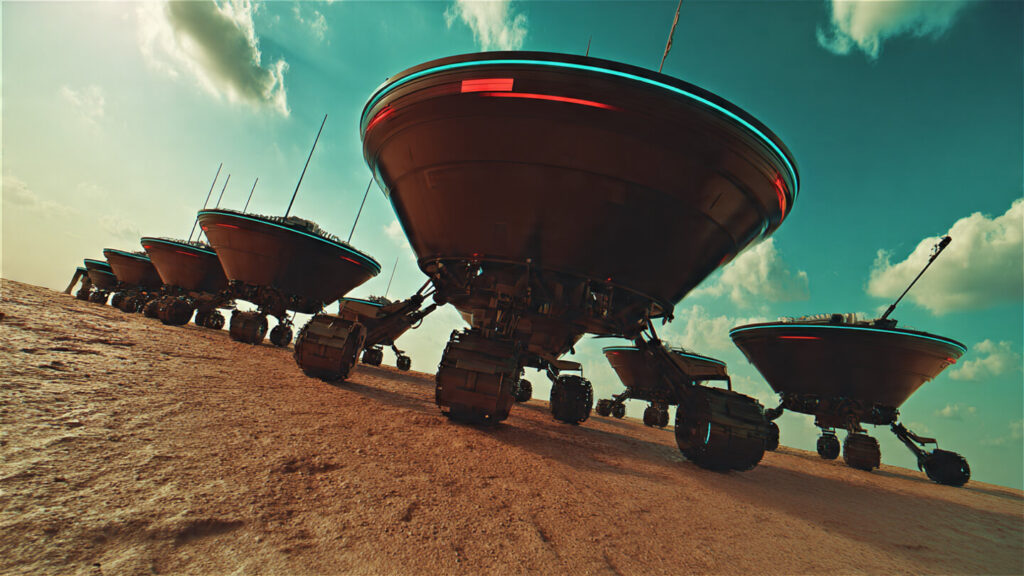
The idea of multi-rover swarms exploring planetary surfaces together—sharing discoveries, coordinating paths, and adapting to new hazards—no longer feels speculative. It feels inevitable.
Why Agentic AI Changes the Economics of Space
Beyond technical achievement, autonomy reshapes mission economics.
- Fewer operators needed per spacecraft
- Faster science returns
- Longer mission lifespans
- Reduced operational costs
Even modest efficiency gains compound over multi-year missions. When a rover makes smarter decisions locally, it saves time, energy, and human effort back on Earth.
That efficiency quietly unlocks more ambitious exploration.
The Bigger Picture
Agentic AI in space missions reflects a broader shift in how we build intelligent systems. These aren’t tools waiting for commands. They’re partners executing intent under extreme constraints.
There’s something deeply compelling about that—machines exploring hostile worlds, making judgment calls, and extending human reach far beyond physical presence.
As autonomy improves, space missions will become less about controlling every move and more about setting goals and trusting the systems we’ve built.
That trust, carefully earned, is redefining exploration.
☕ Buy Me a Coffee
Pingback: SpaceX xAI Acquisition: 7 Bold Reasons This Radical Merger Could Reshape AI Forever