Best AI Tools for Teachers: Ultimate 2026 Classroom Guide
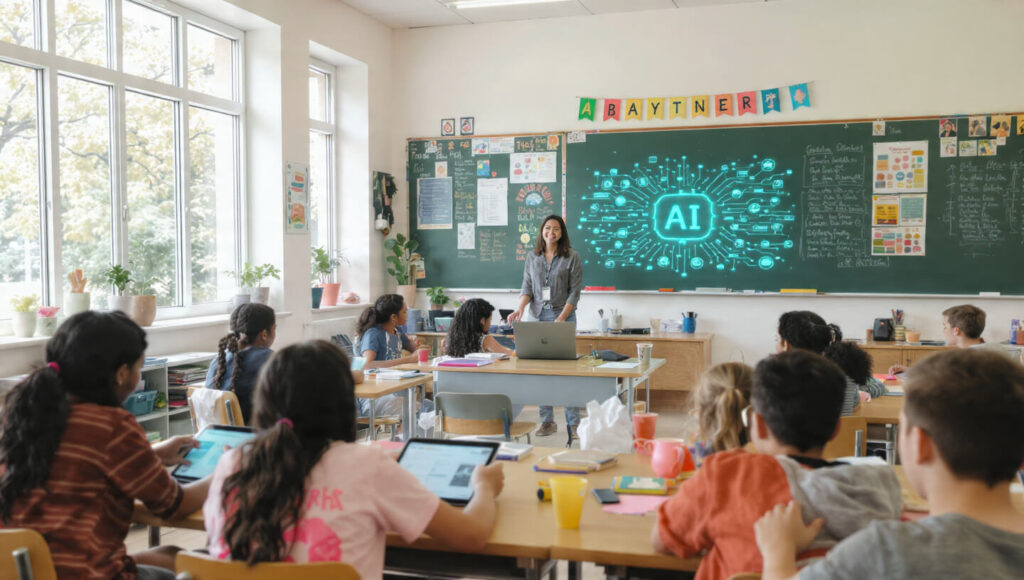
Teaching in 2026 looks nothing like it did five years ago. Walk into any modern classroom and you’ll see something remarkable: students working at their own pace, teachers providing personalized feedback in record time, and lessons that adapt in real-time to student needs. The secret? AI tools for teachers have fundamentally changed what’s possible in education.
But here’s what most articles won’t tell you—AI isn’t about replacing teachers. It’s about giving you back something precious: time. Time to actually connect with students. Time to mentor instead of just manage. Time to teach instead of drowning in paperwork.
Many educators experimenting with AI tools report that the biggest change isn’t technology itself, but how much mental space it frees up for actual teaching.
I’ve watched educators transform their classrooms using these tools, and the results speak volumes. Let’s cut through the hype and look at what actually works.
Why Teachers Are Turning to AI Right Now
The education landscape has shifted dramatically. We’re no longer asking if AI belongs in classrooms, but how to use it effectively. The reason is simple: AI tools for teachers solve real problems that have plagued education for decades.
Think about differentiation. Every teacher knows students learn differently, yet creating multiple versions of the same lesson takes hours you don’t have. AI handles this instantly. Studies show personalized learning approaches can improve retention by up to 30%, and AI makes personalization scalable for the first time.
Here’s what’s actually happening in classrooms right now:
- Teachers cut lesson planning time by 60-70%
- Grading that took hours now takes minutes
- Students get immediate, detailed feedback
- Early intervention catches struggling students faster
- Accessibility barriers drop significantly
The shift isn’t about technology for technology’s sake. It’s about making good teaching sustainable.
The AI Tools Teachers Actually Use (and Love)
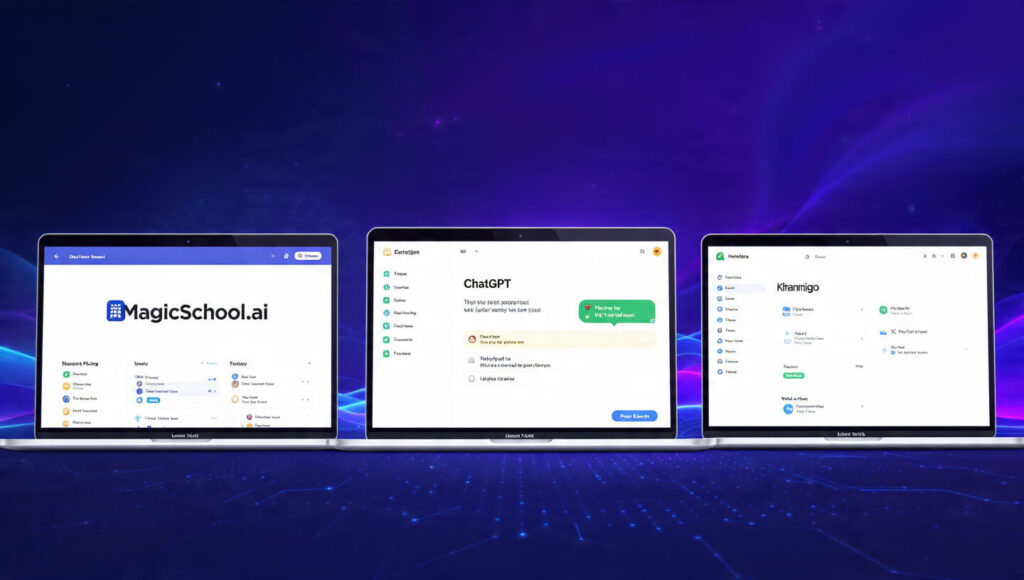
Let’s get practical. These are the platforms making the biggest impact in 2026, tested by thousands of educators worldwide.
MagicSchool.ai: The Swiss Army Knife
With over 60 specialized tools built specifically for educators, MagicSchool.ai deserves its reputation. Need a differentiated lesson plan? It generates three versions—standard, simplified, and advanced—in under a minute. The rubric generator alone saves hours weekly.
Best for: Teachers handling diverse classrooms who need quick differentiation.
ChatGPT Edu: Your Daily Teaching Assistant
OpenAI’s education-specific version has become indispensable for many teachers. Unlike generic ChatGPT, the Edu version understands academic contexts better. Ask it to create a 45-minute lesson on photosynthesis with a formative assessment, and you’ll get structured, grade-appropriate content you can actually use.
The trick? Learn to prompt specifically. Instead of “lesson on fractions,” try “create an engaging 4th-grade fraction lesson using pizza as a real-world example, including guided practice and an exit ticket.”
Khanmigo: The Socratic Tutor
What makes Khanmigo different from other AI tutoring platforms is its refusal to simply give answers. It asks guiding questions, scaffolds thinking, and helps students discover solutions themselves. This Socratic approach builds genuine understanding rather than dependency.
A middle school math teacher in Phoenix reported that struggling students using Khanmigo showed 20% improvement over a semester—not because the AI taught them, but because it taught them how to think through problems.
TeachBetter.ai and Google Gemini: The Contenders
TeachBetter.ai offers 20+ integrated tools covering everything from lesson creation to student simulations, with multilingual support that’s genuinely helpful for ESL educators. Google Gemini, meanwhile, excels at research-aware content creation and integrates seamlessly with Google Classroom.
Both platforms offer free tiers worth exploring before committing to paid plans.
Transforming Lesson Planning with AI
Here’s where AI lesson planning gets interesting. The old process—searching Pinterest, adapting worksheets, creating slides, writing assessments—could eat entire evenings. AI collapses this timeline dramatically.
Start with a clear prompt structure:
- Grade level and subject
- Specific topic or standard
- Lesson duration
- Desired complexity level (Depth of Knowledge 1-4)
- Assessment type
Example prompt: “Design a 50-minute 10th-grade biology lesson on cellular respiration. Include a DOK 3 problem-solving activity, visual diagram opportunities, and a quick formative assessment. Students have basic chemistry background.”
The AI generates a complete framework—learning objectives, engaging hook, scaffolded activities, differentiation notes, and assessment questions. Your job shifts from creation to curation: refining the voice, adding your expertise, personalizing for your specific students.
Tools like Canva Magic Studio pair perfectly here, turning lesson concepts into visual materials. Need a timeline comparing historical events? A diagram showing water cycle stages? Generated in seconds.
Grading and Feedback: Getting Hours Back
Let’s be honest—grading is where teaching dreams go to die. Stacks of essays, inconsistent scoring, students who never read feedback anyway. AI grading tools are changing this equation fundamentally.
Platforms like StarGrader and Graded Pro analyze essays against rubrics, providing detailed feedback in minutes instead of hours. Upload a batch of papers, and the AI scores them consistently, highlights strengths, suggests improvements, and even tracks common errors across your class.
The consistency matters enormously. Human graders get tired, have bad days, unconsciously favor certain writing styles. AI applies the same standards to every submission. That’s not cold—that’s fair.
Quizizz AI takes this further by building entire quizzes from your curriculum materials, then providing real-time analytics during the assessment. You can literally watch which questions stumped students and address misconceptions immediately.
One crucial point: AI should augment your judgment, not replace it. Use it for initial scoring and feedback generation, but add your personal touch, especially for struggling students who need encouragement alongside critique.
Personalized Learning That Actually Scales
Every teacher wants to personalize learning. Few can do it effectively for 150 students. This is where personalized learning AI shines brightest.
Adaptive platforms like DreamBox Learning and LeverageAI analyze student performance continuously, adjusting difficulty and approach in real-time. A student struggles with fractions? The AI doesn’t just repeat the same explanation—it tries different representations, manipulatives, real-world contexts until something clicks.
Socratic by Google takes a different approach: students photograph homework problems, and the AI provides step-by-step explanations without simply giving answers. It’s like having a patient tutor available 24/7.
The data these tools generate is equally valuable. You can identify exactly where students struggle, which concepts need reteaching, and which students need intervention—all before the unit test proves it’s too late.
Classroom Management and Engagement Strategies
Keeping 30 students engaged while differentiating instruction sounds impossible. AI makes it manageable.
Curipod generates interactive presentations with embedded polls, word clouds, and Q&A sessions. Shy students participate anonymously, and you get instant read on class understanding. See 70% confused on a concept? Pause and reteach before moving on.
Edpuzzle embeds questions directly into videos, tracking who watched what and how many times they rewound confusing sections. That data tells you exactly what to review.
For behavior management, tools like Classcraft gamify classroom participation without adding teacher workload. Students earn points automatically; you focus on teaching.
Real Results from Real Classrooms
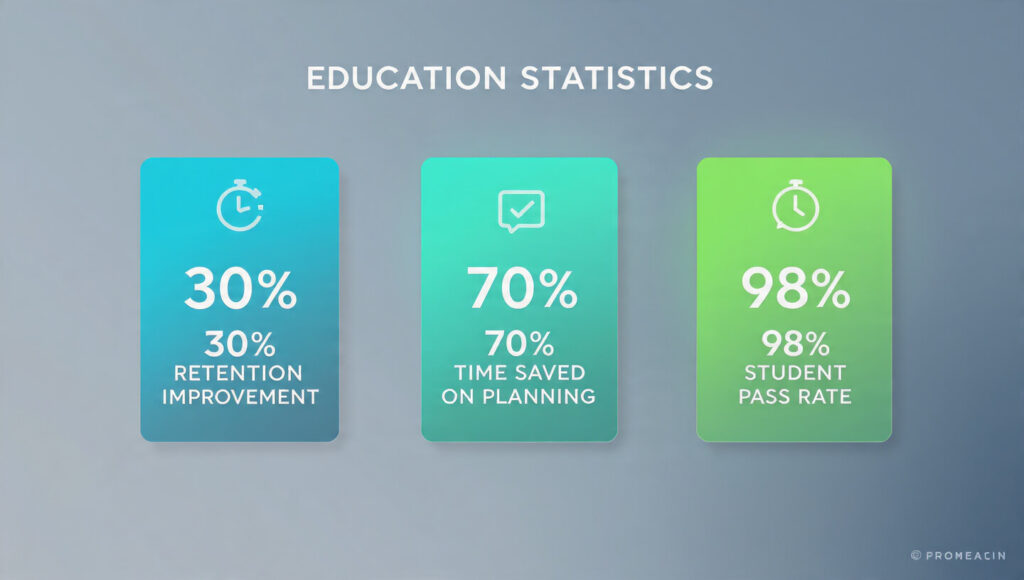
Numbers don’t lie. Schools implementing comprehensive AI education tools report measurable improvements:
- Math scores increased 20-30% in schools using adaptive platforms like Maths Pathway
- At-risk student identification improved dramatically—one project flagged struggling students early enough that 98% passed with C+ or better
- Teacher burnout decreased as administrative tasks automated
- Students with learning disabilities showed higher engagement with AI-adapted materials
Georgia Tech’s AI teaching assistant, Jill Watson, handled thousands of student questions with satisfaction ratings matching human TAs. The professor regained hours weekly for mentoring and research.
Starting Your AI Journey: Practical First Steps
Feeling overwhelmed? Start small and strategic:
Week One: Choose one tool—I recommend MagicSchool.ai for its simplicity—and use it for a single lesson plan. Refine the output, teach the lesson, note what worked.
Week Two: Add Diffit or a similar tool to differentiate one reading assignment into multiple complexity levels.
Week Three: Try AI-assisted grading for one assignment. Compare AI feedback to what you’d write manually.
Ongoing: Explore free professional development on AI ethics in education. The University of Toronto offers excellent resources on responsible AI integration.
Most importantly: teach your students about AI literacy. They’re using these tools anyway—help them use them ethically and effectively.
The Reality Check: Challenges You’ll Face
Let’s address the elephant in the room. AI tools for teachers aren’t magic bullets, and they bring legitimate concerns:
Privacy matters. Student data is sensitive. Only use tools with clear privacy policies, preferably with school or district approval. Never upload personally identifiable information unnecessarily.
Bias exists. AI learns from historical data, which often contains biases. Review AI-generated content for stereotypes or unfair representations before using with students.
Equity is crucial. Not all students have device access at home. Design AI-enhanced lessons with offline alternatives, or advocate for school resources.
Academic integrity requires new approaches. Students can use AI to complete assignments. The solution isn’t banning AI—it’s designing assessments focused on process, application, and unique analysis that AI can’t replicate. Ask students to document their thinking, not just provide answers.
Looking Ahead: Where AI Education Is Going
The AI tools we have in 2026 are just the beginning. Expect emotional AI that detects student frustration and adjusts accordingly. Expect fully autonomous AI agents that manage routine tasks while you teach. Expect VR/AR integrations that make abstract concepts tangible.
The teachers who thrive will be those who view AI as a teaching partner, not a threat or a complete solution. Your expertise, empathy, and creativity remain irreplaceable. AI just makes them more impactful.
Making It Work in Your Classroom
Here’s the truth about AI tools for teachers: they’re only as good as the person using them. The technology is powerful, but pedagogy still matters most. Your understanding of how students learn, your relationship with them, your ability to inspire curiosity—AI enhances these, but never replaces them.
Start with one tool this week. Pick something that solves your biggest pain point, whether that’s planning, grading, or differentiation. Experiment. Fail sometimes. Learn. Adjust.
The future of teaching isn’t about technology taking over classrooms. It’s about teachers like you having the tools to finally teach the way you’ve always wanted to—with time for every student, freedom from administrative drudgery, and support for your creativity.
If you’re experimenting with classroom technology, start documenting what works — those small wins add up faster than you expect.
Your classroom’s transformation starts with a single AI-assisted lesson. What will yours be?
☕ Buy Me a Coffee

Pingback: Agentic AI in 2026: How AI Agents Transform Business - The Evident
Pingback: Why India School Holiday on February 13 Confuses Millions of Parents Every Year - The Evident