Famous Time Travel Stories Explained: Legends, Hoaxes, and Human Imagination

Few ideas capture human curiosity like time travel stories. The thought that someone might slip through history by accident, appear decades out of place, or leave evidence behind is endlessly compelling. It’s why grainy photographs, half-remembered eyewitness accounts, and mysterious documents continue to circulate online as “proof” of time travelers.
Some of these stories are charming misunderstandings. Others are deliberate hoaxes. A few sit in that uncomfortable gray zone where human perception, memory, and coincidence blur together. When examined closely, they reveal less about time machines—and more about how badly we want time to bend.
Let’s walk through the most famous time travel stories ever told, what actually happened, and why they continue to resurface generation after generation.
The Rudolph Fentz Case: The Time Traveler Who Never Existed
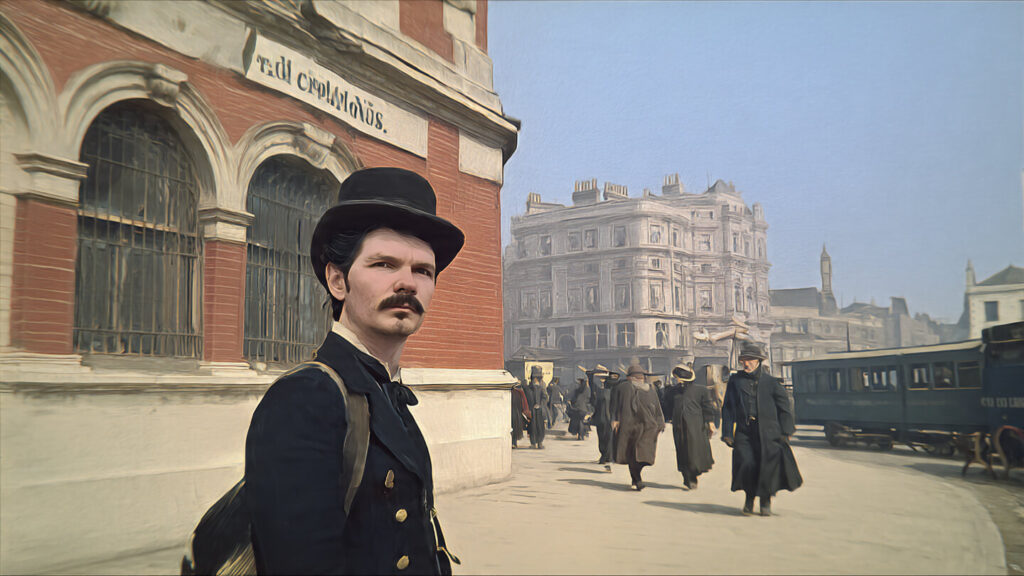
One of the most repeated time travel stories claims that in 1950, a confused man dressed in 19th-century clothing wandered into New York’s Times Square and was struck by a car. Police allegedly found old currency, an 1876 letter, and personal items belonging to a man named Rudolph Fentz, who had vanished decades earlier.
It’s a neat story. Too neat.
The entire account traces back to a 1951 short story by Jack Finney, later stripped of its fictional context and retold as fact. No police reports, death records, or newspaper articles from 1950 support the event. Yet the story refuses to die, largely because it’s presented in such a procedural, official tone that readers want it to be true.
This pattern—fiction repackaged as history—appears again and again in alleged time travel cases.
The Moberly–Jourdain Incident and the Idea of Time Slips
In 1901, two Oxford academics, Charlotte Moberly and Eleanor Jourdain, visited the gardens of Versailles and later claimed they had briefly slipped into the year 1789. They described seeing people in period clothing, unfamiliar landscape features, and what they believed was Marie Antoinette sketching.
Unlike many time travel stories, this one came from educated witnesses who sincerely believed what they experienced. Their book An Adventure became a classic of paranormal literature.
Skeptics point to several explanations:
- The grounds of Versailles were poorly mapped at the time
- Costumed staff and restorations existed even then
- Heat, fatigue, and expectation can dramatically affect perception
What makes this case endure isn’t evidence, but tone. The account feels restrained, serious, and oddly vulnerable. It reads less like fantasy and more like two people trying to understand something unsettling.
Viral Footage and the “Modern Device” Illusion
The Chaplin “Cell Phone” Woman (1928)
A brief clip from the premiere of The Circus shows a woman holding a small object to her ear while walking. When rediscovered decades later, it sparked claims that she was using a mobile phone.
The reality is far less exciting. The object closely matches an early hearing aid, devices that required users to hold receivers to their ears while speaking softly. Context matters. Without it, modern eyes see modern technology everywhere.
The 1943 “Smartphone” Beach Photo
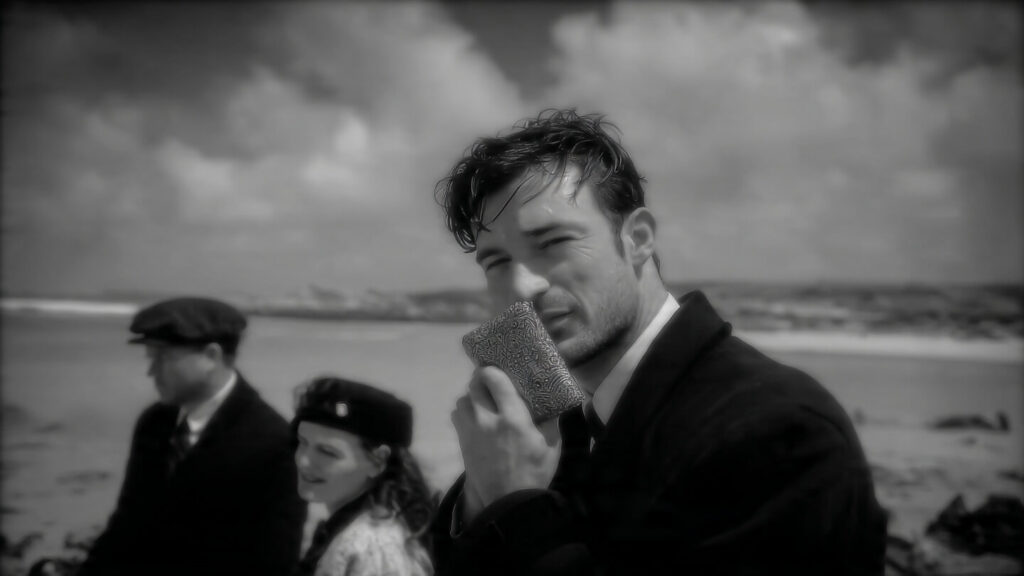
A similar illusion occurred with a photo from Towan Beach in England. A man appears to hold a rectangular object to his face, triggering headlines about a WWII-era smartphone.
The photographer later clarified that the man was almost certainly rolling a cigarette or shielding a lighter from the wind. No device from that era—or ours—matches the object.
Sometimes, a gesture is just a gesture.
The Time-Traveling Hipster That Wasn’t
A 1941 photograph from British Columbia shows a crowd dressed formally at a bridge reopening ceremony. One man stands out—sunglasses, logo sweater, and what looks like a modern camera.
This image spread rapidly under the label “time-traveling hipster.”
Closer inspection ruins the mystery:
- The sunglasses match 1920s mountaineering styles
- The sweater resembles hockey merchandise from the era
- The camera aligns with a Kodak folding model from 1938
It turns out history was more fashionable than we remember.
John Titor: The Internet’s First Famous Time Traveler
No list of time travel stories is complete without John Titor.
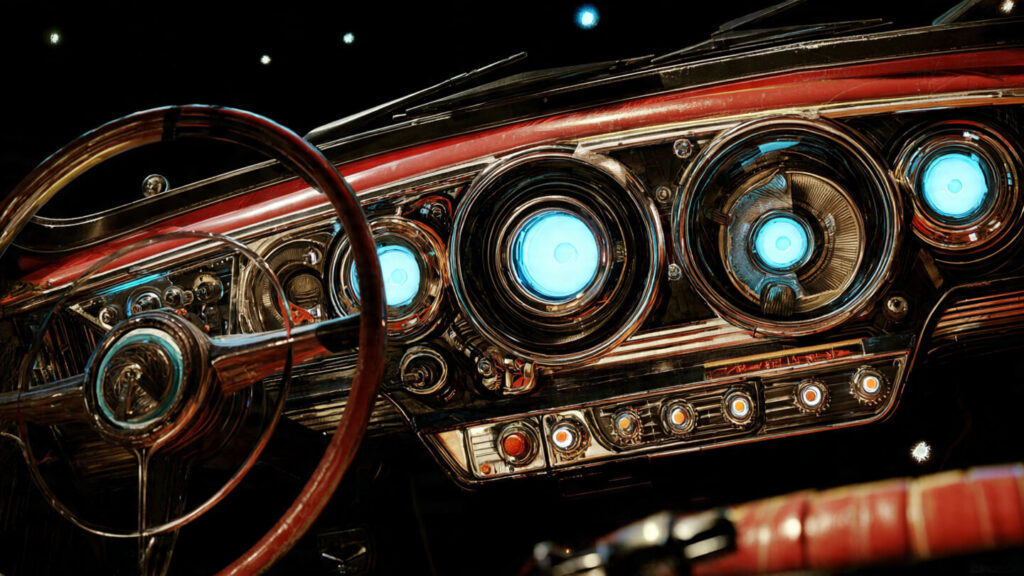
Between 2000 and 2001, an anonymous user posted on forums claiming to be a soldier from the year 2036. He described a time machine mounted in a 1967 Corvette and said his mission involved retrieving an old IBM computer to fix a future computing crisis.
What made Titor fascinating wasn’t his predictions—most failed—but his technical knowledge. He accurately described obscure functions of the IBM 5100 that weren’t widely publicized.
Eventually, investigators linked the posts to individuals in Florida, and the story faded into internet folklore. Still, Titor introduced a powerful idea: many-worlds time travel, where failed predictions simply occurred in another timeline.
Convenient? Yes. Clever? Absolutely.
Andrew Carlssin and the Perfect Stock Trades
The story goes like this: a man turns $800 into $350 million through impossibly accurate stock trades, gets arrested, then claims to be a time traveler from the year 2250.
This tale originated in the Weekly World News, a tabloid known for satire. There are no SEC records, no court filings, and no evidence the man ever existed.
Yet versions of this story still circulate as fact. Financial success combined with time travel is a powerful fantasy—one that survives even the weakest scrutiny.
The Philadelphia Experiment and Military Mythmaking
According to legend, the U.S. Navy attempted to make a ship invisible in 1943. The result supposedly involved teleportation, time displacement, and crew members fused into metal.
Naval records place the ship elsewhere at the time. The story originated from letters written years later by a single individual and grew with every retelling.
Military secrecy provides fertile ground for myths. When official silence exists—even for mundane reasons—speculation fills the gap.
Why Time Travel Stories Never Go Away
There’s a reason these stories keep resurfacing, especially online.
They offer:
- A challenge to linear history
- The thrill of secret knowledge
- A sense that reality might be more flexible than it appears
Modern culture also plays a role. We live surrounded by rapidly evolving technology. When people from the past imagined the future, they were often wrong—but when we look backward, we underestimate how advanced earlier eras already were.
That gap creates confusion. And confusion breeds legends.
What Physics Actually Says About Time Travel
Modern physics doesn’t rule out time travel entirely—but it does make it deeply impractical.
- Relativity allows time dilation, not casual time hopping
- Backward time travel introduces paradoxes with no solutions
- No verified mechanism exists for macroscopic time displacement
In short, the universe isn’t stopping anyone from building a time machine. It’s just not helping either.
Conclusion: Fascinating Stories, Human Origins
When time travel stories are explained honestly, they don’t become boring. They become more interesting.
They reveal how memory works, how technology evolves, and how easily narrative fills gaps in evidence. None of these cases provide proof of time travel—but all of them tell us something real about belief, perception, and the stories we want to be true.
If anything, the persistence of these legends proves one thing beyond doubt: humans aren’t just obsessed with the future. We’re desperate to revisit the past—and rewrite it.
☕ Buy Me a Coffee
Pingback: Savannah Guthrie Mom Missing: The Alarming Case of Nancy Guthrie - The Evident
Pingback: 2026 Winter Olympics: Everything You Need to Know About Milano Cortina - The Evident
Pingback: Ireland Weather Warnings Explained: Essential 2026 Safety Guide | Met Éireann Alerts - The Evident