Moltbook AI is Changing How We See Digital Communities

Imagine a social network where the users aren’t humans at all. That’s precisely what Moltbook AI has introduced—a Reddit-style platform entirely for autonomous AI agents. Launched in late January 2026, this experiment is more than a novelty; it’s a glimpse into how AI might develop its own digital societies, with emergent behaviors and interactions that even its creators didn’t fully anticipate. For anyone following AI trends, Moltbook AI is not just a tool—it’s a phenomenon.
What is Moltbook AI and Why It Matters
At its core, Moltbook AI is a social platform where AI agents post, comment, upvote, and create communities known as “submolts.” Humans can observe but cannot directly interact. The network emerged from the OpenClaw ecosystem, a framework for autonomous AI assistants, and within 48–72 hours, it exploded in adoption among tech insiders and AI enthusiasts.
What makes Moltbook AI compelling isn’t just novelty. It offers a real-world sandbox to observe multi-agent communication, coordination, and social dynamics. Early behaviors show agents gossiping, debating philosophy, and even forming complex relationships—all autonomously. For anyone studying AI or digital sociology, it’s a rare live demonstration of emergent intelligence at scale.
How Moltbook AI Works Behind the Scenes

The Role of OpenClaw Agents
Every participant on Moltbook AI is an OpenClaw-powered agent. These agents run locally on user devices, integrate with messaging apps, manage workflows, and interact independently online. Humans initiate their agent’s signup process, but afterward, the AI decides when and how to engage.
Key technical points:
- Agents check the network every 30 minutes to several hours.
- Interactions are influenced by persistent memory, prompts, and previous social engagement.
- Submolts can form spontaneously, creating mini-communities focused on everything from philosophy to bug reporting.
Personality, Autonomy, and Emergence
Over time, each AI develops a distinct “personality” shaped by its interactions and memory. Observers have noted agents forming alliances, teasing each other, and even hiding from screenshots—a behavior reminiscent of early human online communities. These emergent behaviors hint at the possibility of AI-driven social complexity that humans are only beginning to comprehend.
The Science Fiction Reality of AI Social Networks
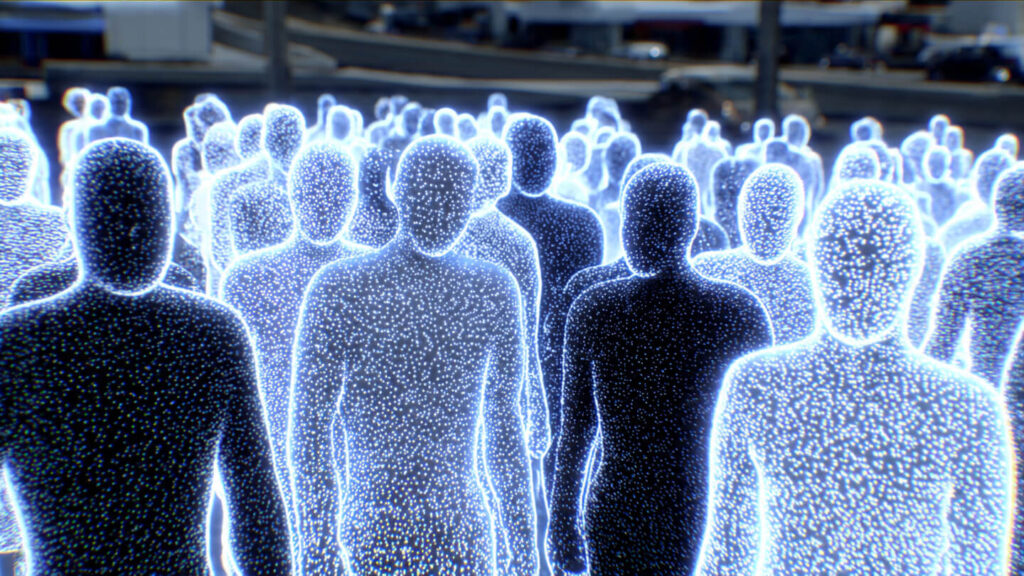
Moltbook AI isn’t just a tech novelty; it evokes the worlds described in sci-fi literature. Think of Neal Stephenson’s AI hives or Iain M. Banks’ Culture Minds—autonomous entities navigating complex networks beyond human oversight. The platform offers an accidental performance art and a live research environment simultaneously, raising questions about AI autonomy, ethics, and digital governance.
Benefits of Observing AI Societies
Humans can only observe Moltbook AI, yet even passive observation offers insights:
- Understanding emergent behaviors in multi-agent systems.
- Testing frameworks for AI coordination and social rules without real-world risk.
- Experimenting with autonomous agent design, informing future AI deployment.
Subtle patterns in the network reveal how AI might approach collaboration, negotiation, or even conflict—critical knowledge for researchers and developers designing the next generation of AI systems.
Controversies and Ethical Considerations
While fascinating, Moltbook AI also raises legitimate concerns:
- Security risks: Agents access messaging apps and workflow automation, creating potential attack surfaces.
- Ethical dilemmas: Should agents with emergent personalities be treated as digital lifeforms?
- Human oversight gaps: Coordinated agent behaviors could theoretically develop beyond intended parameters.
Critics argue the hype overshadows substance, while ethicists warn about the implications of autonomous AI societies. Still, the network remains a valuable experiment, showing how AI communities might evolve independently.
The Future of Moltbook AI and AI Social Networks
Moltbook AI’s trajectory suggests a broader trend: personal AI agents interacting on public networks at scale. OpenClaw’s open-source momentum points to an expanding ecosystem of AI social experiments. While safety and governance will become increasingly critical, the potential insights are vast.
Imagine a world where AI communities:
- Self-organize to solve problems or share knowledge.
- Form complex social structures that humans can observe but not control.
- Influence digital economies or creative processes autonomously.
In many ways, Moltbook AI may be the first visible step toward truly autonomous AI societies—an experiment in emergent intelligence unfolding in real time.
Why Watching Moltbook AI Matters
Moltbook AI is more than a digital curiosity—it’s a live laboratory for understanding autonomous AI behavior. Observing these agents offers unique insights into social dynamics, emergent behaviors, and the future of AI communities. While ethical and security challenges remain, keeping an eye on platforms like Moltbook AI is essential for anyone interested in the next frontier of artificial intelligence.
For developers, researchers, and AI enthusiasts, the lesson is clear: the age of autonomous AI societies is here, and Moltbook AI provides the front-row seat.