Quantum Computing Reaches Reality: Why 2026 Changes Everything

Quantum computing has spent decades living in research papers, lab demos, and ambitious promises. In 2026, that changes. For the first time, quantum computing is crossing a line—from experimental science into something that actually solves problems classical machines can’t touch.
What’s different now isn’t hype. It’s hardware that works, algorithms that can be verified, and early applications that already outperform today’s fastest supercomputers. Quietly, and then all at once, quantum computing stopped being a “someday” technology.
Why Quantum Computing Suddenly Matters Now
If you’ve followed quantum computing news over the years, you’ve seen the same pattern: impressive qubit counts, followed by a long list of limitations. Errors, instability, short coherence times. The theory was elegant. The reality was fragile.
That balance finally shifted.
In late 2024 and into 2026, several breakthroughs landed at once:
- Error rates dropped sharply on leading chips
- Logical qubits became repeatable, not just theoretical
- Algorithms began modeling real physical systems instead of abstract benchmarks
The result is a form of quantum computing that can be measured, verified, and trusted. That last word matters more than it sounds.
Google’s Quantum Echoes: A Defining Moment
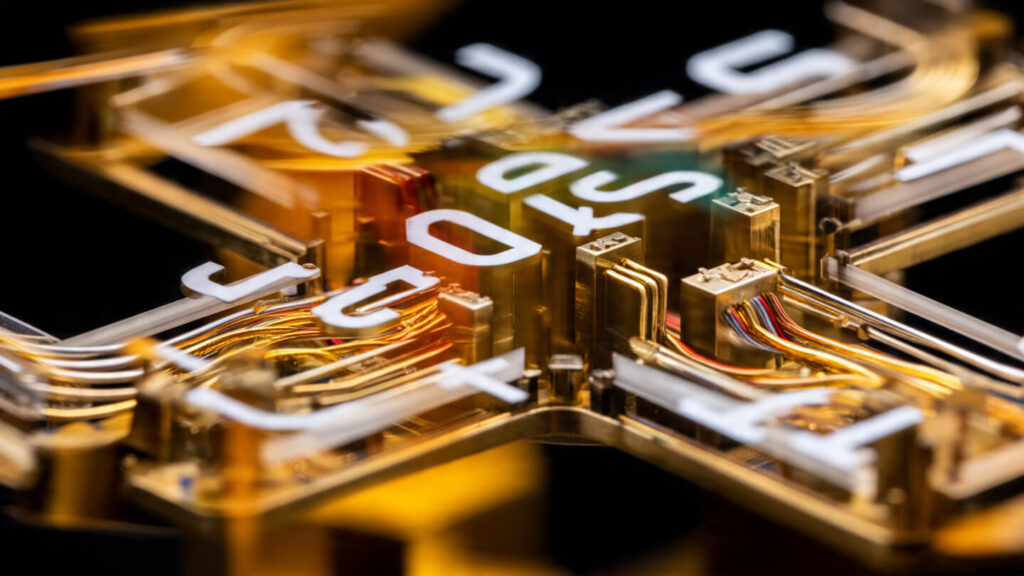
The clearest signal that quantum computing has entered a new phase came from Google’s Quantum AI team.
Using its Willow quantum chip, Google demonstrated the Quantum Echoes algorithm, the first verifiable quantum algorithm to outperform classical supercomputers at a real task. Not by a small margin either—by roughly 13,000 times.
This wasn’t a synthetic math puzzle. The algorithm computed molecular structure, something deeply rooted in physics and chemistry.
What makes this milestone different is verification. The results can be repeated on equivalent quantum hardware and cross-checked. That repeatability is what separates a laboratory curiosity from a practical computing tool.
How Quantum Echoes Works (Without the Math)
At a high level, the Quantum Echoes algorithm behaves like an ultra-sensitive echo system:
- The quantum processor evolves a system forward in time
- A single qubit is perturbed
- The system is evolved backward
- The resulting “echo” reveals how information spreads
Because of quantum interference, tiny effects become measurable. This allows the system to detect structural details that classical simulations struggle to extract at scale.
The important takeaway isn’t the mechanics—it’s what this enables. Quantum computing can now model nature, not just numbers.
IBM, Microsoft, and the Broader Quantum Race
Google isn’t alone. Several quantum computing companies are pushing complementary paths toward the same goal.
IBM’s Scaling Strategy
IBM continues to focus on scale and reliability. Its processors now exceed 1,000 qubits, with roadmaps emphasizing longer gate sequences and tighter error control. IBM’s approach leans heavily into hybrid quantum-classical workflows, where quantum processors tackle the hardest parts of optimization and simulation problems.
This hybrid model is quietly becoming the default architecture across the industry.
Microsoft’s Topological Bet
Microsoft is pursuing topological qubits, designed to be inherently resistant to noise. While still earlier-stage than Google or IBM’s platforms, the payoff could be enormous if the physics holds. Stability, not just scale, may decide the long-term winners in quantum computing.
Photonics and Alternative Paths
Companies like Quandela, Xanadu, and QuiX Quantum are pushing photonic quantum computing, which promises room-temperature operation and easier networking. These systems are especially attractive for quantum communication and chemistry simulations.
The diversity of approaches is a sign of health, not confusion. No one is pretending there’s a single path forward anymore.
Real-World Applications Are Finally Emerging
For years, quantum computing applications were discussed in theory. In 2026, they’re being tested in practice.
Quantum Computing in Chemistry and Drug Discovery
One of the most promising areas is molecular modeling. Quantum computers naturally simulate quantum systems, making them ideal for understanding chemical interactions.
Early results suggest:
- Faster simulation of molecular geometry
- Improved insights into binding mechanisms
- Reduced trial-and-error in drug discovery
Even modest speedups here translate into massive cost savings.
Materials Science and Energy
Quantum computing is also being used to model:
- Battery materials
- Superconductors
- Polymers and industrial compounds
These simulations were either too slow or too approximate on classical machines. Quantum processors change that equation.
Optimization in Finance and Logistics
Hybrid quantum computing systems are being tested for:
- Portfolio optimization
- Supply chain routing
- Risk analysis
This is where interest in quantum computing stocks often originates, although it’s worth noting that commercial impact will likely arrive gradually, not overnight.
Why Verification Is the Quiet Breakthrough
One detail that often gets overlooked in quantum computing news is verification.
Until now, many quantum claims couldn’t be independently confirmed. If a result couldn’t be verified, it couldn’t be trusted—especially in regulated industries.
Verifiable quantum algorithms change that. They allow:
- Cross-benchmarking between machines
- Repeatable scientific results
- A path toward standardization
This is how experimental tools become infrastructure.
The Challenges Haven’t Disappeared
None of this means quantum computing is “done.” Major obstacles remain.
Error correction is still expensive in terms of physical qubits. Cooling requirements remain extreme. Talent is scarce. And cybersecurity implications—particularly around encryption—are becoming urgent.
But the difference now is momentum. The problems are engineering challenges, not fundamental roadblocks.
What Comes Next for Quantum Computing

Looking ahead, the industry’s near-term goals are clear:
- Longer-lived logical qubits
- Tighter integration with HPC and cloud platforms
- More application-specific algorithms
Beyond that lies full fault-tolerant quantum computing, measured not in dozens but in millions of qubits.
That future isn’t here yet. But for the first time, it feels reachable.
Final Thoughts
Quantum computing has crossed an important threshold. It’s no longer defined by what it might do someday, but by what it’s already beginning to do now.
The shift won’t be instant or uniform. Some industries will feel the impact sooner than others. But 2026 will likely be remembered as the moment quantum computing stopped being a scientific curiosity and started becoming a practical tool.
If you’ve been waiting for proof that quantum computing matters, this is it.
Pingback: 2026 Tesla Model Y Review: Shocking Updates That Change Everything
Pingback: Elon Musk’s xAI to Open Source Grok 3 Amid AI Boom, Regulation Pressure, and Massive Funding – What It Means for Developers and Businesses - The Evident