Xbox Project Helix Revealed: The Bold Next-Gen Console That Could Change Gaming Forever
On March 5, 2026, Microsoft Gaming CEO Asha Sharma used a live Xbox Wire broadcast to officially confirm the codename that had been fueling industry speculation for weeks — Xbox Project Helix. Described as “a revolutionary hybrid gaming machine that natively runs both Xbox exclusives and full PC games,” the device represents Microsoft’s most ambitious hardware bet since the original Xbox launched in 2001.
Microsoft has not released official spec sheets, pricing, or prototype images. What does exist — on-record CEO statements, developer briefing summaries reported by outlets including Windows Central and The Verge, and supply chain analysis — provides enough material for a detailed, grounded assessment of where this platform is heading. This breakdown examines what is confirmed, what is credibly reported, and where the gaps in current information still lie.
What Is Xbox Project Helix, Really?
At its core, Xbox Project Helix is being positioned as a bridge console — a device designed to eliminate the traditional divide between a gaming console and a gaming PC. The strategic logic is straightforward: rather than forcing players to choose ecosystems, Microsoft wants one box that handles both.
Sharma’s confirmed quote — “Play your Steam library on Xbox day one” — is the clearest public signal of the platform’s architecture. According to reporting from Windows Central, Helix will run a customized Windows 11-based OS with an Xbox-optimized front-end shell, enabling native execution of standard PC game files alongside traditional Xbox titles without an emulation layer. Microsoft Store integration would give users direct access to Steam, the Epic Games Store, and GOG from a single controller-navigated interface.
The precedent for this approach exists in Valve’s Steam Deck, which uses Linux Proton to translate Windows game calls at the operating system level. Microsoft’s architectural advantage is that it owns Windows outright — making native PC compatibility a cleaner solution than anything Valve has built for its handheld.
This is also not a new concept internally. Developer briefing documents, reported by The Verge, reference a 2016 internal project also called “Helix” that proposed unified Xbox/PC game releases. The project was shelved at the time, almost certainly due to hardware limitations. The 2026 revival arrives with AMD silicon that makes the concept genuinely feasible at scale.
The Hardware Ambitions (And the Costs That Come With Them)
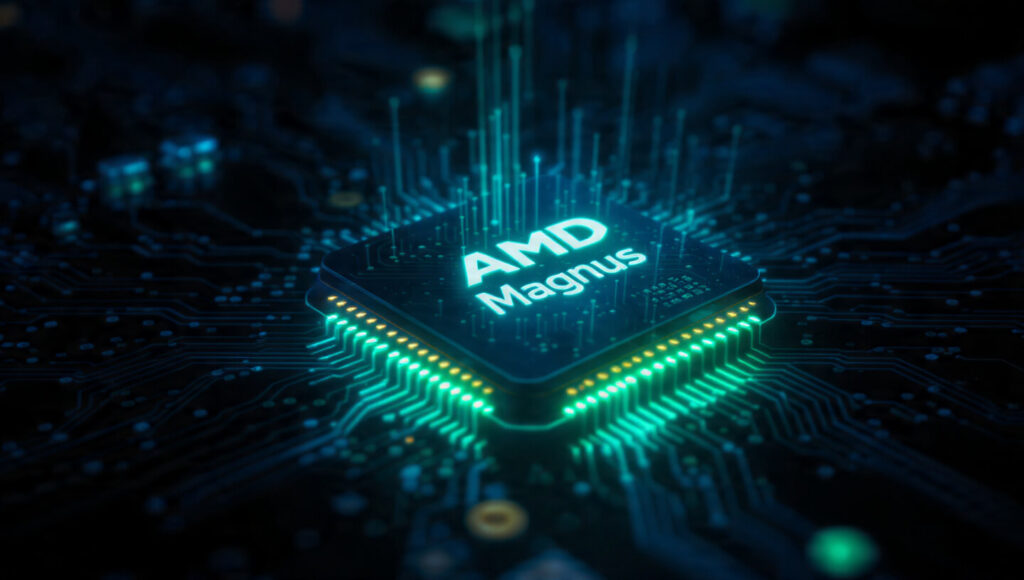
Developer briefings and supply chain reports, as aggregated by Digital Foundry and Tom’s Hardware, outline the following unconfirmed but consistently cited specifications:
- Custom AMD “Magnus” SoC built on TSMC 3nm/2nm process
- 12 Zen 6 CPU cores (split across gaming, physics, and OS tasks)
- RDNA 5 GPU targeting 4K/120 FPS ray-traced or 8K/60 FPS
- 48GB GDDR7 RAM, with a dedicated 20GB gaming pool at 38 Gbps
- 2–4TB NVMe SSD hitting 15GB/s read speeds
- Dedicated NPU at 80–100 TOPS for AI upscaling and real-time denoising
AMD CEO Lisa Su has indicated manufacturing readiness for advanced SoC designs by Q4 2026, per Reuters coverage of AMD’s investor communications, with mass shipments aligned to a 2027 window. Performance projections cited in briefings claim 4x the rasterization output of Xbox Series X and 6x ray tracing throughput — figures that would represent a genuine generational leap if manufacturing yields support them.
The economic challenge is significant and well-documented. Semiconductor analysts at TechInsights have noted that AI-optimized silicon BOM costs have risen sharply since 2024, with estimates placing a Helix-class chip package above $900 in materials alone. That’s before assembly, cooling, storage, or retail margin. For context, Xbox Series X units have been selling at $649+ MSRP as of late 2025 due to TSMC fabs prioritizing data center GPUs like NVIDIA’s H100.
Microsoft has historically subsidized console hardware and recovered margin through software and subscriptions. With Game Pass Ultimate now at $29.99/month following the post-2025 price increase, the subscription math needs to carry significant weight.
Game Pass, Backwards Compatibility, and the Ecosystem Play
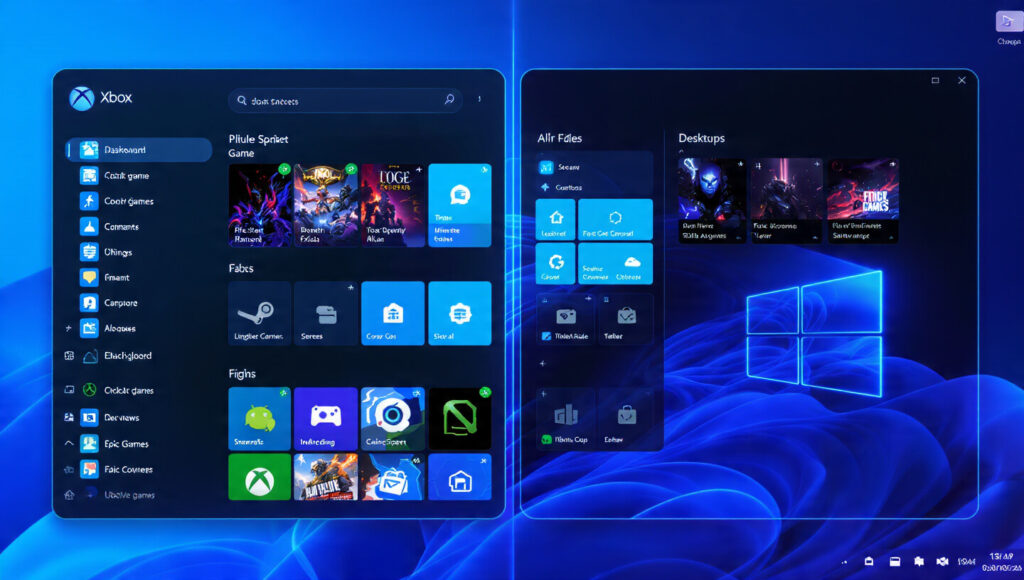
Xbox Project Helix isn’t just about hardware. It’s meant to be the definitive Game Pass machine — the one device that finally brings everything Microsoft has built over the last decade into a single, clean experience.
That means:
- 500+ console titles and 1,000+ PC games from the Game Pass library playable locally
- Full Xbox backwards compatibility — 1,000+ Xbox One games, 600+ Xbox 360 titles, 100+ original Xbox games, all upscaled
- Auto HDR, FPS Boost (up to 120 FPS on older titles), Quick Resume across 8+ suspended games
- AI-enhanced reconstruction pushing sub-60 FPS legacy games to 144 FPS via the onboard NPU
Backwards compatibility has been one of Xbox’s most underrated wins this generation. Most players don’t lead with it when buying a console — but they absolutely appreciate it once they own the hardware. If Helix can genuinely upscale a 2003 Xbox title to look and perform like a modern remaster without any extra purchase, that’s real, tangible value that competitors can’t easily replicate.
A Modular Console? Weighing the Real Trade-Offs
Industry analysts have debated whether Xbox Project Helix will support any form of hardware modularity — specifically, M.2 NVMe storage slots for user-upgradeable SSDs and USB4/Thunderbolt connectivity for external GPU docks, similar to the ROG Ally X ecosystem already on the market.
The potential benefit is meaningful: extending competitive hardware lifespan to 5–7 years rather than the typical 3–4 before performance gaps with PC gaming become commercially damaging. It would appeal directly to PC builders who view hardware replacement cycles as normal behavior.
The countervailing risk is equally well-established. Hardware variance creates a developer fragmentation problem that console platforms have historically avoided by design. Optimization decisions — resolution targets, draw distance, texture streaming budgets — all depend on knowing exactly what hardware is in the box. Sony’s “it just works” platform message has resonated precisely because it removes those variables.
Microsoft has not confirmed modularity. However, the hybrid Windows-based OS makes user-accessible hardware expansion architecturally possible in ways that sealed Xbox consoles never were. Whether Microsoft exercises that possibility is a product strategy decision as much as a technical one — and the answer will tell us a lot about who Helix is actually built for.
When Will Project Helix Actually Launch?
The current reported roadmap points to a November 2027 global launch, which aligns with Microsoft’s approximate 7-year console cadence — Xbox Series X/S launched in November 2020. Based on reporting from Windows Central and IGN, internal milestones are structured as follows:
- Q2 2026 — Silicon tape-out
- Q4 2026 — Developer kits distributed
- Summer 2026 — Full public reveal at Summer Games Showcase
- H1 2027 — Manufacturing ramp-up
- November 2027 — Global consumer launch
A Holiday 2026 launch has been floated as a best-case outcome contingent on TSMC yield rates hitting 80% or above. Most semiconductor analysts view that threshold as optimistic given current fab demand. TSMC capacity allocation remains the dominant external variable in any console launch timeline — a constraint that affects Microsoft, Sony, and every other major hardware company simultaneously.
The Xbox Handheld Connection: Meet “Keenan”
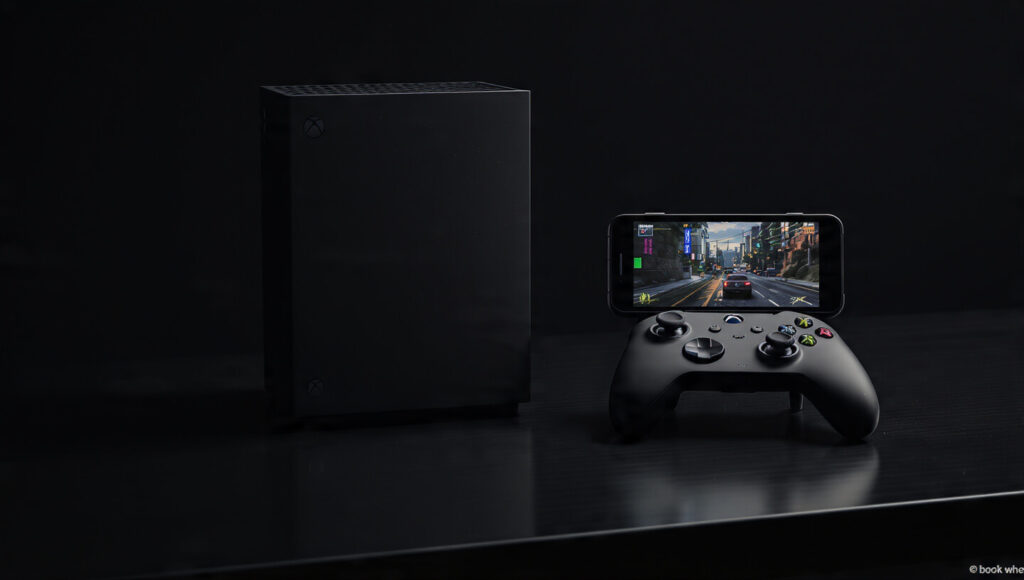
Project Helix doesn’t exist in isolation. Alongside it, Microsoft is reportedly developing a dedicated Xbox handheld codenamed “Keenan” — expected to use binned versions of the same Magnus chip — with a target launch window of Q4 2027 or 2028 at an estimated $799–$999 price point, per developer briefing reports covered by The Verge.
The ecosystem integration between the two devices is where the real value proposition emerges. The goal, based on available information, is a seamless transition: start a session on your living room Helix setup, and resume exactly where you left off on Keenan via Xbox Cloud and Quick Resume sync — same save state, same achievement progress, full cross-input support across controller, keyboard, and mouse configurations.
This builds directly on the foundation Microsoft established with the ROG Xbox Ally X, the Xbox-branded handheld PC that launched in 2025. Azure edge servers are being architected to target 20ms latency worldwide for cloud-streamed sessions — a threshold that Akamai’s gaming latency benchmarks identify as the point where most players can no longer perceive input lag in fast-paced games.
What Does “Helix” Actually Signal?
The DNA double helix represents two distinct strands that twist together into a single, stable structure — which maps cleanly onto Microsoft’s stated goal of merging Xbox console gaming and Windows PC gaming into one unified platform. That reading is the most straightforward interpretation and almost certainly intentional.
A second interpretation centers on the AI hardware. The onboard NPU could enable gameplay features that go well beyond upscaling: procedurally generated world content, NPC dialogue systems that adapt in real time to player behavior, or integrated coaching tools that provide context-aware hints through voice. Microsoft’s internal briefings, as reported by Ars Technica, have referenced AI-driven gameplay feature development that extends beyond image processing. If those features ship in meaningful form, the “Helix” name takes on an additional layer — not just two platforms joined, but two types of intelligence (human player, AI system) working in parallel throughout the experience.
Is Xbox Project Helix the Right Move for Microsoft?
Consumer sentiment data gathered from GDC 2026 developer surveys and community polling aggregated on Xbox subreddits suggests 45% of enthusiast buyers are comfortable paying $600–$800, while another 30% would stretch to $800–$1,000 for the right hardware. Only 8% expressed disinterest, and 7% indicated they are leaning toward PS6 instead.
The strategic calculus for Microsoft is clear. Average buyers will not evaluate Xbox Project Helix on teraflop counts or NPU TOPS ratings. They will ask whether their current game library works, whether Game Pass continues to deliver value, and whether the setup process is simple enough to not require a YouTube tutorial. Microsoft’s hybrid ambitions only succeed if that last question has an obvious answer.
The full hardware reveal expected at Summer Games Showcase 2026 will be the real test. Every hybrid device that has blurred the line between platforms — including devices from Valve, ASUS, and Lenovo — has faced the same fundamental question from reviewers: does this actually work as both things it claims to be, or does it compromise on both? Microsoft has the software ecosystem, the subscription infrastructure, and the AMD partnership to make Helix genuinely work. Whether the execution matches the ambition is the only question that matters now.
🔗 You Might Also Like

Transform Your Life: AI in Everyday Life Made Simple
📅 February 11, 2026
Discover how AI in everyday life simplifies tasks, boosts productivity, and saves time. From smart homes to health tracking—start using…
Read Full Breakdown →@the_evident Two identical videos. 2M views vs 500 views. 📉 Same page. Same quality. The difference? Completion rate. The 2026 algorithm watches ONE thing obsessively—how many people FINISH your video. Not likes. Not shares. If your first 3 seconds don't hook them? The algorithm walks away. If your first 60 mins go cold? Your content is dead. Most people still post like it's 2021. Those tactics now hurt your reach. I broke down the 4 ranking stages and the exact content mix winning in 2026. 🔗 Link in bio for the full article. 👇 Save this video so you never forget the 60-minute rule! 💾 #algorithmhack #facebookalgorithm #viralvideotips #socialmediastrategy #marketing2026
♬ original sound – The Evident